New Book from CVMN Member Ben Shrader Now Available for Pre‑Order
New Book from CVMN Member Ben Shrader Now Available for Pre‑Order
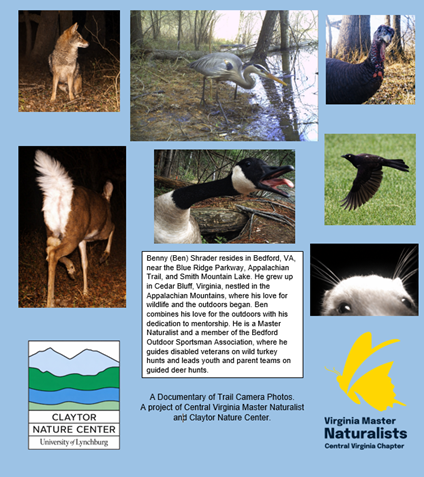
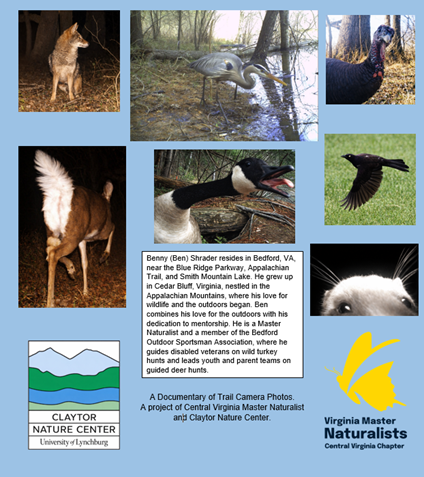
For more than three decades, long‑time Central Virginia Master Naturalist Ben Shrader has quietly documented the wildlife of Claytor Nature Center through thousands of hours of trail‑camera recordings and personal field observations. This spring, Ben is bringing that lifetime of watching, listening, and noticing into a new book—now available for pre‑order.
The forthcoming volume blends 30+ years of trail‑camera data, 54 documented species, and Ben’s own reflections from a lifetime spent exploring the mountains and valleys of Virginia. The result is a rare look at the rhythms of Blue Ridge wildlife, captured through both scientific curiosity and deep personal connection.
Early reviewers are already praising the book’s extraordinary photography. As Rupert Cutler notes, the “wow factor” comes from the trail‑camera images themselves—some of the finest photos of Virginia wildlife he has seen in his long career. These motion‑activated cameras recorded mammals, birds, and other species moving through forests, fields, and stream corridors at all hours, creating a visual record that is both beautiful and scientifically valuable.
In his preface, Ben reflects on the purpose behind the project: a long‑term effort “to collect data important for the perpetual learning and study of CNC’s wildlife existence and trends.” He also shares how these observations connect to memories of his childhood in Tazewell County nearly 70 years ago—reminding readers that nothing replaces time spent outdoors, and that reading can deepen the appreciation that experience begins.
CVMN is proud to celebrate Ben’s work and the insight it brings to our region’s natural history.
To add your name to the pre‑order list, please contact Ben directly at:
Be A Master Naturalist Multitasker
Are You a Master Naturalist Multitasker?
by Ann E Lis, CVMN
I am sometimes overwhelmed by the sheer volume and variety of Master Naturalist volunteer opportunities. While this is a good problem to have, it can mean choosing between equally desirable, but conflicting activities.
In 2025, there was a Tree-mendous emphasis on tree-related projects, and in 2026, #Wow, look at the array of water-focused events! Then there are the hobbies that I enjoy. How do I balance being a naturalist with quality time for family, friends and other pursuits?
You have probably already figured out the secret – multitasking. Combine your naturalist efforts with other interests. Include friends and family in citizen science, stewardship or other endeavors even if they aren’t necessarily passionate about the particular subject or task.
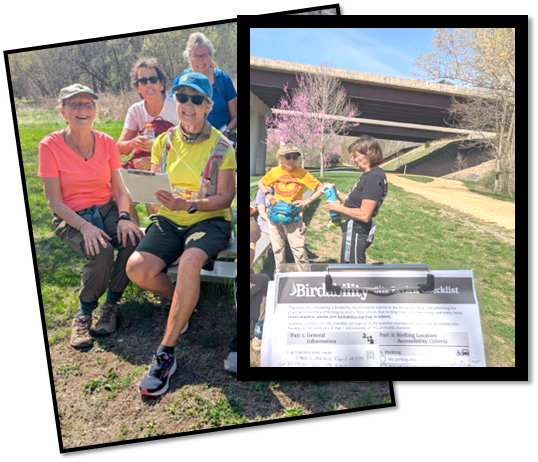
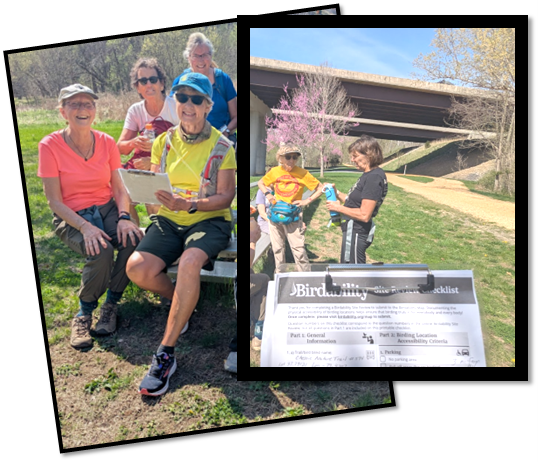
One of the projects I enjoy is Birdability, which is evaluating site accessibility for birding. It can be time-consuming to cover the geographic scope and complete the 5-page questionnaire. For a survey visit to Lynchburg’s Old City Cemetery, I invited a friend to join me there instead of our usual neighborhood walk.
I was able to piggyback my Birdability assessment of the Chessie Nature Trail with a scheduled trail club hike. Other hikers helped me take measurements like trail width and bench height, and identify birds and wildflowers along the 7-mile route. They made the task easier and in turn, they appreciated learning something new.
You may find opportunities for collaboration where you work. I volunteer at a nearby landmark and have spoken with leaders there about potentially providing education on invasives, doing bird walks etc. Their mission isn’t about nature per se, but promoting an understanding of the plants and wildlife onsite is relevant.
I’ve even been able to pursue nature related interests at home. Several neighbors and I clean up fishing debris left behind at the community lakes. And we maintain a turtle (goose, duck, heron, cormorant…) basking platform that increases visibility of the wildlife residing in and around the lake.
The neighborhood HOA has allowed me to add a Naturalist Notes section to the quarterly newsletter, creating a new writing opportunity for me. And hopefully it’s expanding awareness among residents that we live not just in a community but in a habitat.
Multitasking may get a bad rap in terms of brain psychology and work productivity, but in the great outdoors, what could be better?
Are you a Master Naturalist multitasker?
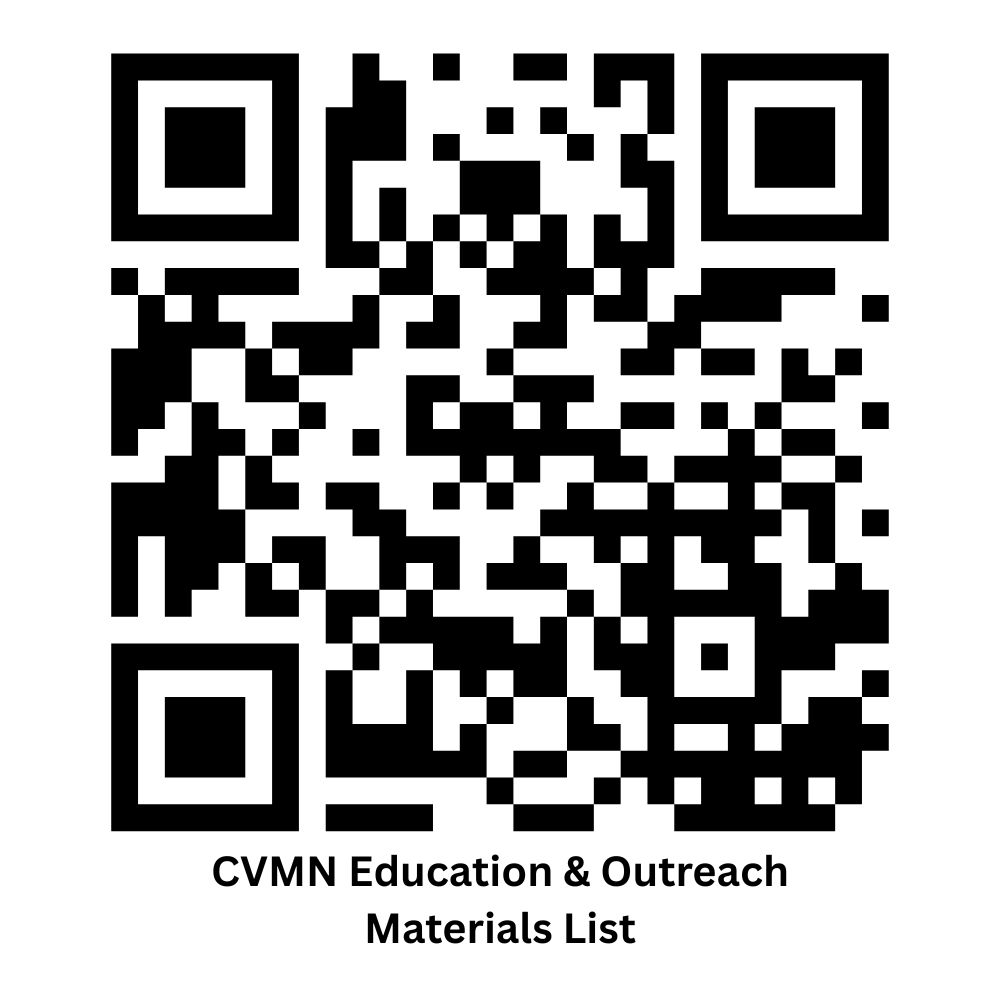
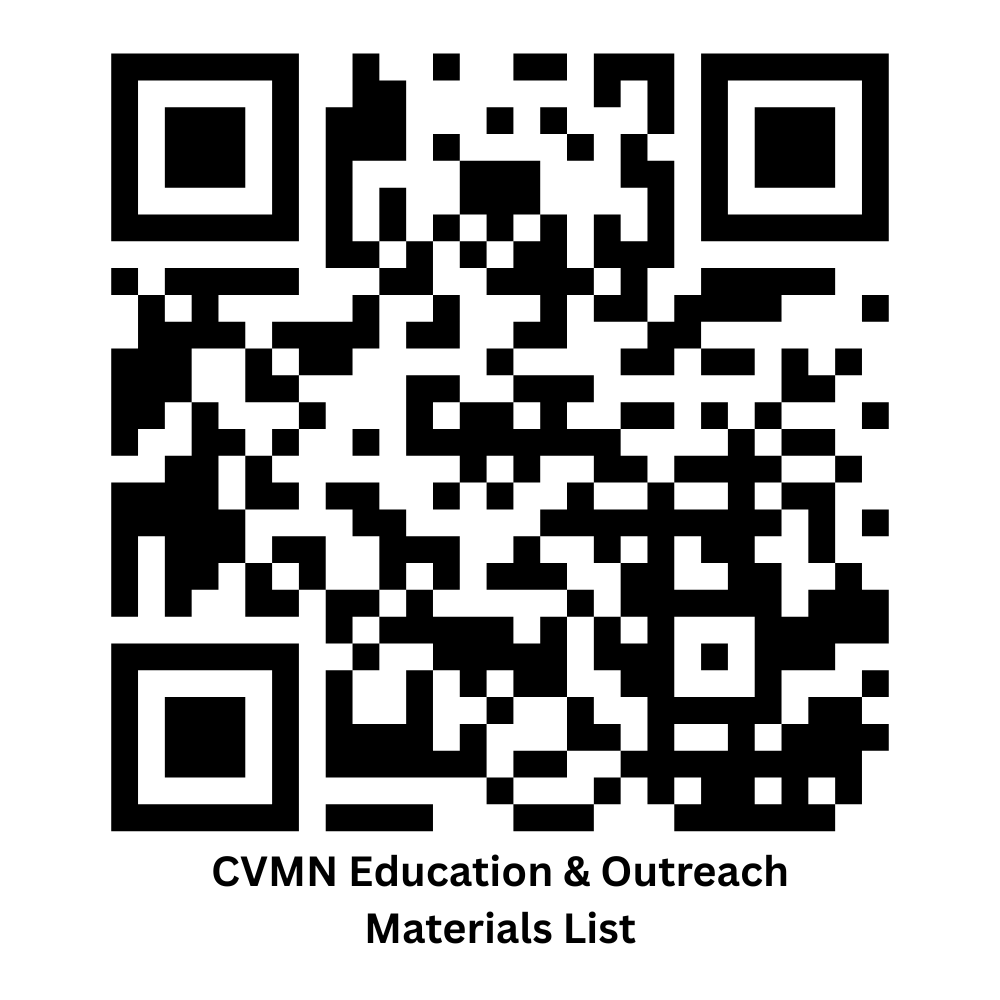
New CVMN Resource: Outreach & Education Materials List Now Available
Explore CVMN’s new online catalog of borrowable outreach and education materials, now just a click or QR scan away.
Central Virginia Master Naturalists are active across our region—leading hikes, hosting tables at community events, supporting school programs, and sharing the wonder of the natural world with learners of all ages. To make that work easier, our chapter has created a new online catalog of educational and outreach materials that members can borrow for programs throughout the year.
This catalog brings together the full range of items our volunteers use in the field, including:
Event equipment such as tables, a 10x10 tent canopy, weighted sandbags, banners, and table covers
Educational displays including posters on bats, trees, pollinators, watersheds, macroinvertebrates, and invasive species
Hands‑on teaching tools like insect stencils, nature photo boards, foam insects, rulers with aquatic insect designs, and a large turtle display
Outreach supplies such as brochures, business cards, CVMN flyers, and themed stickers
Activity materials for kids including coloring pages, matching games, Jenga blocks, and window clings
Field equipment like Save Our Streams kits, long‑handled trash pickers, work gloves, and loppers
Each item in the catalog includes the name of the member who currently stores it, making it simple for volunteers to reach out and borrow what they need. For example, many items are currently held by Sharon Clements, including the CVMN display board, table covers, posters, and outreach handouts; other materials are with members such as Helen Wheelock, Susan McConnell, Ann Lis, Nora Cox, and Suzy Rodemann.
You can now explore the full list anytime at:
👉 www.cvmn.org/materials-list
A QR code linking directly to the page will also be included in this post and can be shared with fellow volunteers, event partners, and new members to make the catalog even more accessible.
This resource reflects the generosity and collaboration that define our chapter. Thank you to every member who contributes materials, maintains them, and uses them to spark curiosity across Central Virginia.
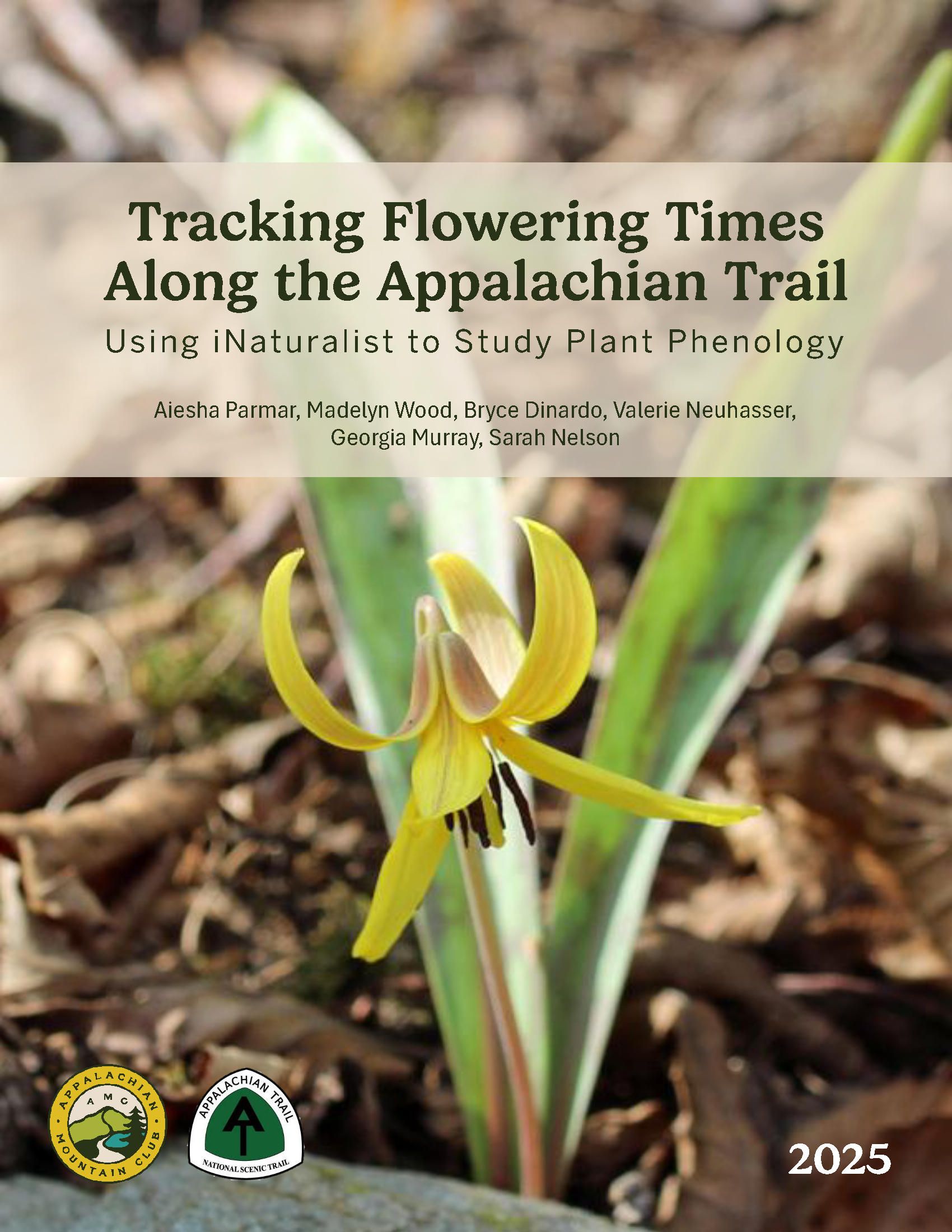
Tracking Flowering Times Along the AT
Plant phenology, or the timing of seasonal growth, flowering, and fruiting, is a critical bioindicator of ecological responses to climate change. Shifts in phenological timing can cascade through ecosystems, influencing species interactions, migration, and resilience. The Appalachian Trail (A.T.) corridor, stretching 2,198 miles through 14 states and spanning nearly 2,000 meters in elevation, serves as a “mega-transect” for studying these changes across broad climatic gradients. The Appalachian National Scenic Trail, consisting of the treadway and approximately 300 meter buffer, is part of the National Park system and benefits from long-term federal protections to conserve natural and cultural resources across the trail. The Appalachian landscape has been recognized nationally as an important migratory corridor and a key region for biodiversity and building resilience to climate change. Monitoring plant phenology long-term across broad spatial scales and mountainous terrain presents challenges, but community science provides a practical solution.
Mastering the Art of Being A Master Naturalist

As a budding, soon-to-be certified, Master Naturalist, it is taking me time to find my footing and my place in the natural world.
What does it mean to be a Master Naturalist? What are my areas of interest and perhaps passion. How do I balance being informative vs being obnoxious?
Early in my basic training, I asked the instructor, “Will I get to a point where I’m not horrified every time I step outside?” I had learned just enough to recognize a few invasives, threatened species and harmful practices, but not enough to establish perspective or priorities.
My nephew, who introduced me to the master naturalist program, cautioned me early on, “Don’t get arrogant about invasives.” Well that is easier said than done. It’s hard not to condemn every Autumn Olive bush and every swath of Japanese Stilt grass. I get it though. Assisting nature is a balancing act. Interventions have to be measured and coordinated. And sometimes avoided altogether.
Another thing to not get arrogant about is sharing my limited knowledge. With everyone. Unsolicited. Like when a friend and her husband were clearing around a small fishing pond. Noticing some downed trees along the water’s edge, I commented how turtles love basking on them. Her husband replied as he dragged a tree up on shore, “I don’t want turtles, they’ll eat my fish.”
As we walked back toward the house, my friend pointed to a natural section of the lawn and asked, “Should I clean up all of these leaves?” I hesitated. “Well, the leaves and small limbs are actually good habitat for insects, birds, animals...” I stopped there. It was their property. And I wanted to be invited back.
While I’ll never be an expert, I do long to be one of those people on a hike that can identify flora and fauna on sight and speak intelligently about it. I want to hear the warble of a bird or the hammer of a woodpecker and know immediately what it is without Merlin’s assistance.
But honestly, I often feel like I know less than the average citizen. Friends and family now assume I’m knowledgeable (about everything!) and will ask me what’s this or what’s that and I have to confess I don’t know. But I can find out!
If nothing else, being a naturalist gives me hope in these times of turmoil. And a framework to better understand aspects of our unnatural, man-made world. Whether it is rediscovering a box turtle that has been monitored for 20+ years or seeing native plants peeking through in an area formerly overrun by invasives, it is reassuring to see that life goes on. If nature can be resilient, so can we.
And the good news is, there is no rush to figuring this all out. I have a lifetime left to explore, learn and contribute. And maybe earn some cool volunteer pins along the way.
By Ann E Lis